
Cracks and movement lines
Suitable wall and ceiling cracks are opened, filled, reinforced where required and sanded before coating.
Plaster repairs Melbourne
Repair cracks, holes and damaged wall or ceiling plaster before painting, with careful filling, sanding and preparation for a smooth, consistent result.
What's included
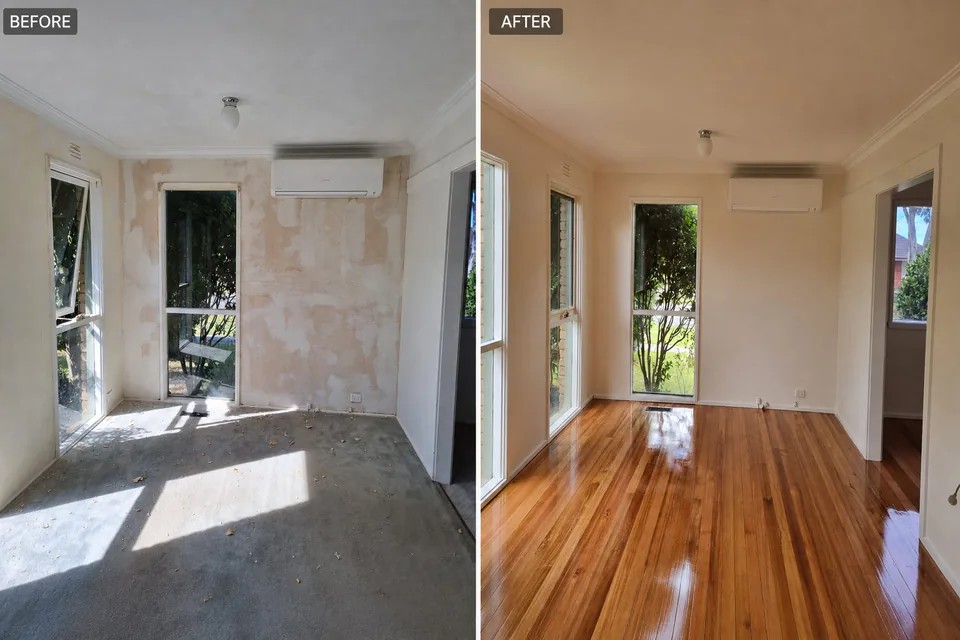
A fresh coat cannot hide unstable or uneven plaster. We assess the damage, complete suitable repairs and prepare the surrounding surface so the finished area blends properly.
Suitable wall and ceiling cracks are opened, filled, reinforced where required and sanded before coating.
Small holes, dents and damaged sections are patched and levelled to restore a paint-ready surface.
Affected areas are assessed and unsound material is addressed before the repair and preparation stages.
Repairs can be combined with repainting the relevant wall or ceiling for a more even and consistent result.
Built around preparation
Good plaster repair is a sequence: identify the affected area, create a stable patch, allow materials to set correctly, sand the surface level and prime before painting. Rushing one stage often makes the repair visible later.
For broader cracking, moisture or repeated movement, the underlying cause may need separate investigation. We explain what is suitable within the painting and plaster repair scope before work begins.
See where we work across Melbourne's northPlaster across the north
The plaster repairs needed in a 1960s home are very different from those in a five-year-old estate home. These are the jobs we see most across Melbourne's north.
In estates around Wollert, Mernda, Doreen and Craigieburn, hairline cracks appear at cornices and over doorways as homes settle. They're raked out, filled, sanded and painted so they don't show.
Post-war homes in Lalor, Thomastown and Reservoir often have long ceiling cracks and sagging joints. Sound ceilings are repaired; anything loose is flagged for a plasterer first.
Removed TV mounts, shelves and picture hooks leave holes and patches. They're filled flush and primed so the repaired area disappears under the new paint.
Once a leak is fixed, stained or damaged plasterboard is repaired or patched, sealed with a stain-blocking primer and repainted to blend in.
How it works
You will know what is happening at each stage. Wondering about price? Our painting cost guide explains what affects it.
Request a free quoteWe look at the cracks, holes or water damage and tell you honestly what can be repaired and what needs replacing.
Damaged areas are cut back, filled, taped where needed and built up in layers.
Repairs are sanded smooth and primed so they take paint the same way as the wall around them.
The wall or ceiling is painted so the repair blends into the finished surface.
Where we work
Settling cracks in newer estates and older cracked ceilings in post-war homes are both common across the north. Each local page covers the repairs we see most in that suburb.
Local pages: Epping · Wollert · South Morang · Mill Park · Lalor · Thomastown · Mernda · Doreen · Bundoora · Craigieburn · Reservoir · Preston · Greensborough. See all northern suburbs we serve.
Helpful answers
Yes. Combining repair and painting helps create a more consistent finish because the patched area can be primed and coated as part of the same planned job.
The goal is a smooth repair that blends with the surrounding surface. Texture, lighting, previous coatings and whether the full wall or ceiling is repainted can affect the final appearance.
Many common ceiling cracks and damaged sections can be assessed and repaired. If movement or moisture appears to be the cause, that issue may need to be resolved first.
Yes. Once the leak has been fixed, stained or damaged plasterboard is repaired or patched, sealed with a stain-blocking primer and repainted so the area blends in. Badly sagging or soft sections may need replacing first, and we'll tell you if that's the case.
Yes. Email clear photos showing the damaged area and the wider wall or ceiling. A site visit may still be needed to confirm the cause, repair method and quote.
No. Most hairline cracks come from normal settling and seasonal movement. Wide, growing or diagonal cracks are worth getting checked by a builder before repairs.
Small repairs can sometimes be touched up, but painting the full wall usually gives the most even finish, because older paint fades and changes colour over time.
Free site visit and quote
Send a few details and some photos and we'll get back to you to arrange a free site visit and a written quote. Prefer to talk or email?